Bed bugs after a hotel stay or a dorm move: how they hitch a ride
Bed bugs don't care how clean your place is; they care about getting carried in, and the fix starts with knowing how that happens.
October 14, 2026 · 4 min read
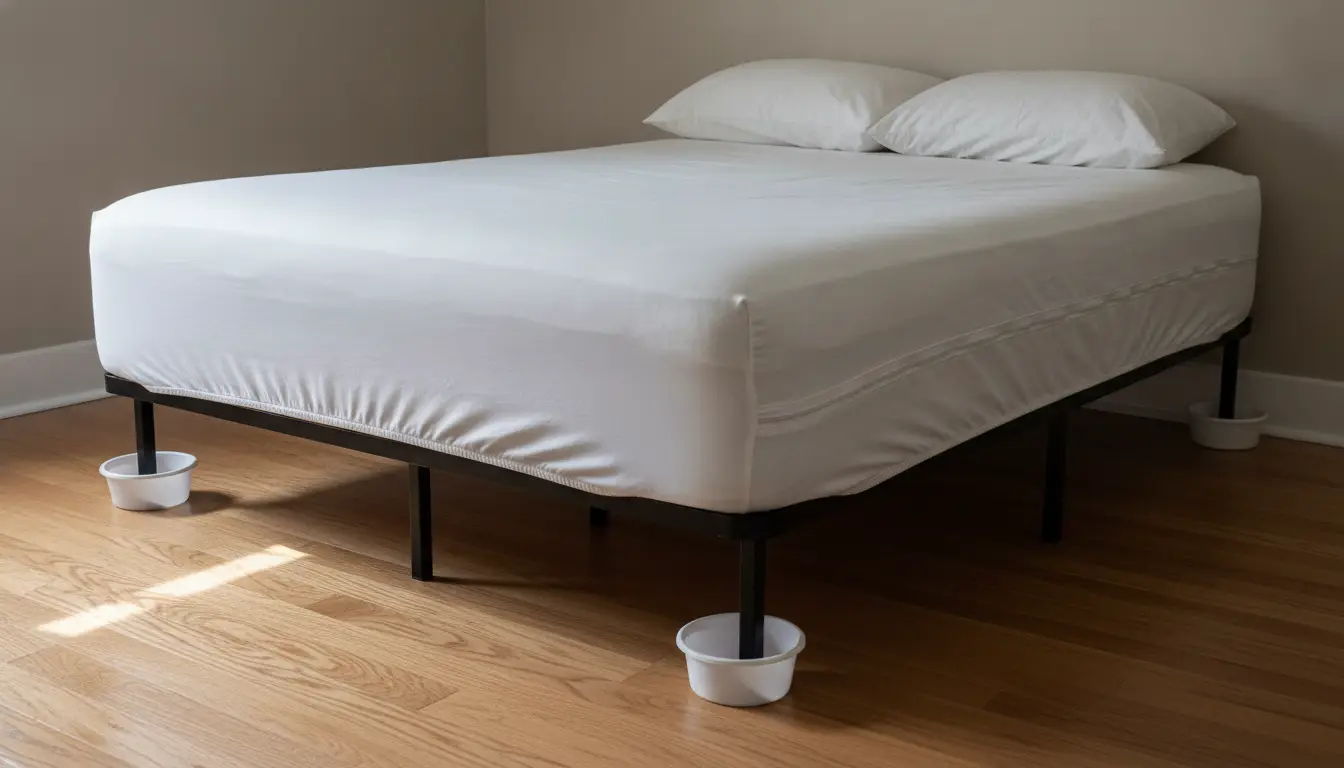
Bed bugs have a reputation as a dirty-house problem, and that reputation has kept a lot of people from calling anyone until the problem has been going on for weeks. It's the wrong idea. Bed bugs are hitchhikers. They don't move into a place because it's messy. They live where people sleep, and they get there on the things people carry.
All-N-One Pest Control's own material lists the places where bed bugs get picked up: offices, doctors' offices, hospitals, stores, schools, college dorms, theaters, churches, hotels and motels. That's about as long a list as you could write of places people go. The point isn't to make anyone nervous about a movie theater. It's that nobody can avoid every one of those places, so the useful question is what you do when you get home.
How one bed bug turns into a household problem
A bed bug is flat, about the size of an apple seed, and good at squeezing into seams. In the daytime they hide in mattress piping, box spring folds, headboard joints, behind baseboards and under outlet covers. At night they come out to feed. They'll crawl onto a suitcase, a backpack, a jacket draped over a chair or a bag of laundry, and then ride home with you. A single fertilized female is enough to start a population, because she lays her eggs in the cracks near wherever she settles.
Bites alone are an unreliable way to tell. Some people react badly, others don't react at all, and bites look a lot like mosquito or flea bites. Better signs are physical: small dark spots on the sheets or along mattress seams, tiny shed skins, a few rust-colored smears, or live bugs along the piping of the mattress.
The first night home from a trip
- Leave luggage in the garage, the entry or the bathtub, not on the bed or on the carpet near it. A smooth tub is a hard place for a bug to hide.
- Run the clothes through the dryer on high heat before anything goes into a drawer. It's the heat in the dryer that matters here, so a quick wash alone isn't the same thing.
- Look over the luggage seams, zippers and pockets with a flashlight before the bag comes into the bedroom.
- At a hotel, pull back the mattress corners and check the headboard seam when you arrive, and keep your bags on a luggage rack away from the wall rather than on the bed.
- For a dorm move, check anything secondhand before it goes in the room: the futon, the couch, the desk chair. Trunks and bedding that sat in storage deserve the same look.
College dorms are on that list for a reason. Students move in, share laundry rooms, borrow furniture and come home on weekends with a duffel bag. A dorm room that gets a bed bug problem will often send it home with the student at the end of the semester, and parents end up finding out about it at the worst time.
What encasements and interceptors actually do
When All-N-One bids a bed bug job, the bid includes mattress and box spring encasements and climb-up interceptors. Those two items are worth understanding even if you never need them.
An encasement is a zippered cover that seals the mattress or the box spring. Bed bugs can't use the seams and folds as a hiding place anymore, and any that are inside can't get back out. All-N-One's material also notes that encasements block entry points, allergens and dust mites, so it's a cover that earns its place for reasons beyond bugs.
A climb-up interceptor is a small cup that sits under each leg of the bed frame. The outside wall is rough enough that a bug can climb up it, and the inside well is smooth, so what climbs in can't climb out. That does two jobs. It cuts the path between the floor and the bed, and it gives you a way to see whether there are still bugs around after a treatment. A bed that's pulled away from the wall, with no sheets dragging on the floor, is what makes the cups work.
Treatment, follow-up and what prevention can and can't do
Some of All-N-One's bed bug services include a follow-up treatment at the fifteen day mark. That fits how the pest works. Not every bug is at the same stage at the same time, so a second visit catches the ones that weren't ready the first time.
For places where a lot of different people come and go, like an office, a waiting room, a small hotel or a rental property, they also offer a prevention service built around a product called Apprehend, applied quarterly. Their material is honest about the limits: prevention can't stop you or a guest from bringing a bug in, but it can stop an infestation from establishing. For a business owner, that is the distinction that matters. You can't control who walks through the door, but you can control whether one bug turns into a problem.
One thing to avoid is dragging the mattress to the curb. It feels decisive, but it spreads bugs along the hallway, down the stairs and across the yard, and it doesn't solve what's in the frame, the baseboards or the next room. Leave it in place, wrap it in an encasement, and call.
If you think something came home with you, call All-N-One at 810-736-9513, or ask about it at the shop at 4294 Richfield Road in Flint.
All-N-One Pest Control, 810-736-9513
Call 810-736-9513More articles
Yellow jackets in the wall or the ground: what to do and what to leave alone
A nest you can't see is more dangerous to poke at than one hanging from the eaves, and most of the common fixes make it worse.
Why beetles pile up on the sunny side of your house every fall
They aren't eating your house or moving in to stay; they're looking for a warm crack to spend the winter in, and your south wall is the best-lit place on the block.