Yellow jackets in the wall or the ground: what to do and what to leave alone
A nest you can't see is more dangerous to poke at than one hanging from the eaves, and most of the common fixes make it worse.
October 14, 2026 · 4 min read
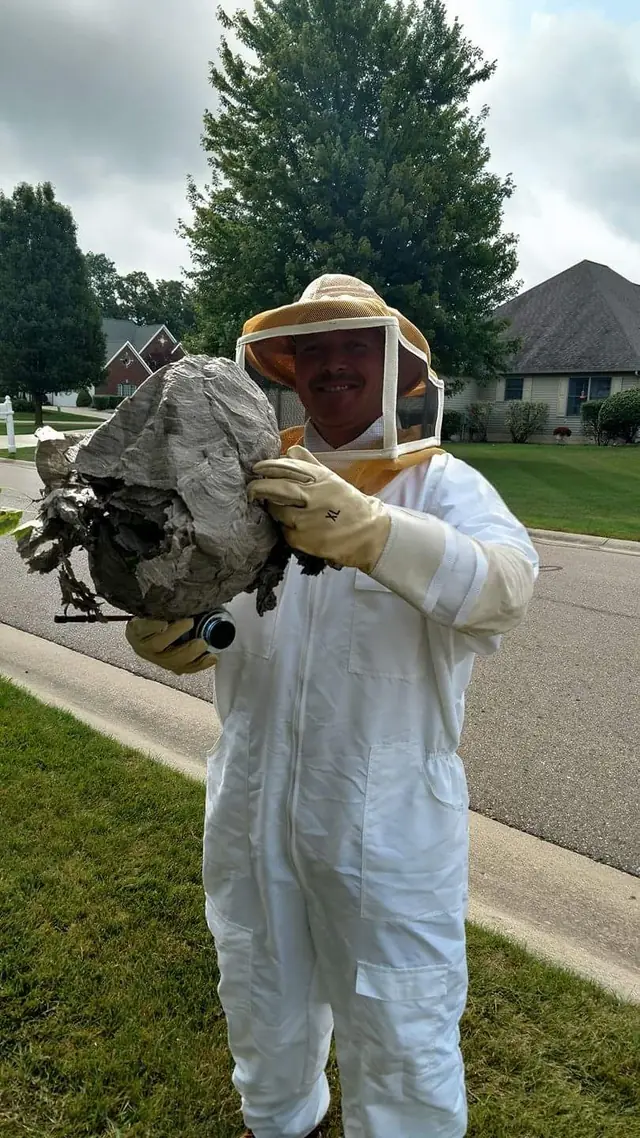
Most people meet a yellow jacket nest by accident. Somebody mows over a spot in the back yard and gets stung half a dozen times before reaching the porch. Or a kid points out that a lot of wasps keep disappearing into the same crack beside the garage. Or you hear a low buzzing inside the bathroom wall at night and decide it must be the pipes.
Yellow jackets are not the same as the paper wasps that hang a gray umbrella nest under your eaves. They build in the dark. A colony will move into an old rodent burrow in the lawn, a gap behind siding, a void inside a wall, or a corner of the attic, and from the outside all you see is a small hole and a steady line of traffic. The nest itself is made of chewed wood fiber, and it keeps growing all summer. By late August and September a colony is at its biggest, the workers are searching harder for food, and they get short-tempered about anything that vibrates, smells wrong or gets in their flight path.
Watch the traffic before you do anything
The first move is to do nothing except watch, from a distance. Pick a sunny afternoon, stand well back, and note where the insects go in and out. One opening with a steady stream of wasps coming and going is the entrance. Write down where it is: how far from the house, which wall, which window or door it's closest to. That description is worth more than you'd think when you call someone, because it tells the technician what kind of nest to expect before the truck ever leaves the lot.
Then keep kids, pets and yourself away from that spot. Yellow jackets can sting more than once, and a disturbed nest sends defenders out fast. If the entrance is near a door you use every day, use a different door for now.
The things that make a hidden nest worse
- Don't mow or weed around a ground nest. The vibration of a mower or a trimmer reads as an attack, and the colony answers it. If the nest is in the lawn, leave that patch of grass alone until it's been dealt with.
- Don't caulk or stuff the entrance of an active nest. It feels like the logical fix, but the wasps don't stay sealed in. They look for another way out, and in a house that other way out is often a gap around a light fixture, an outlet or a seam in the drywall.
- Don't push on, tap or knock on an interior wall where you can hear them. Noise and movement tell the colony something is wrong, and a thin layer of drywall between you and the nest isn't much of a barrier.
- Don't try to burn, flood or smoke a nest out of the ground. Home remedies like that tend to produce an angry colony and a person standing in the middle of it.
Why they end up inside the house
One of the reviews on All-N-One Pest Control's Google page shows exactly how this goes. A homeowner wrote, "We were in panic mode after finding out that yellow jackets were coming thru our bathroom drywall ceiling by chewing through it....my husband got stung several times." The review goes on to say the crew took out a large nest.
That's the usual pattern. A nest inside a wall void starts out sealed in. As it grows it runs out of room, and workers start chewing toward light, warmth or a way out. Drywall and plaster aren't much of an obstacle to a wasp that has mandibles and an entire summer to work with. If you're seeing yellow jackets inside the house, assume there's a path from the nest to the room, and treat that as a sign the colony is bigger than you'd like.
What a professional visit covers
All-N-One Pest Control handles wasp and yellow jacket nest removal for homes and businesses, and one detail worth knowing is that treatment is included with each nest removal. The reason is simple. Pulling out a nest and leaving the spot untreated invites the next queen to move into the same cavity. Treating the location is how you make sure there are no return nests.
If you're on the preventative program, the same thinking applies to ground nests near the house. Their program notes ask you to report a ground nest, and removal is included when the nest is close to the home's perimeter. Either way, the technician is going to be wearing a full bee suit and veil, which tells you something about how this job goes when it's done without one.
Timing matters more than most people think
Yellow jacket colonies die off with the hard frosts, and only young queens go into hiding for winter, which leads some people to decide they'll just wait it out. That's a bad bet when the nest is in a wall. The stings, the chewed drywall and the stained ceiling all happen well before the first frost does.
So call as soon as you've confirmed an entrance, and call before you've tried anything on it. If the nest is in a wall, a soffit or the attic, call the same day you hear it. If it's in the ground, call before the next time anyone mows. You can reach All-N-One at 810-736-9513, or stop by the shop at 4294 Richfield Road in Flint, and bring that note about where the traffic is going.
All-N-One Pest Control, 810-736-9513
Call 810-736-9513More articles
Bed bugs after a hotel stay or a dorm move: how they hitch a ride
Bed bugs don't care how clean your place is; they care about getting carried in, and the fix starts with knowing how that happens.
Why beetles pile up on the sunny side of your house every fall
They aren't eating your house or moving in to stay; they're looking for a warm crack to spend the winter in, and your south wall is the best-lit place on the block.