Do it yourself or call a pro: what the products on the counter are for
A walk-in pest shop is handy for the small stuff, and the best use of it includes knowing when to put the product down and make a phone call.
October 14, 2026 · 4 min read
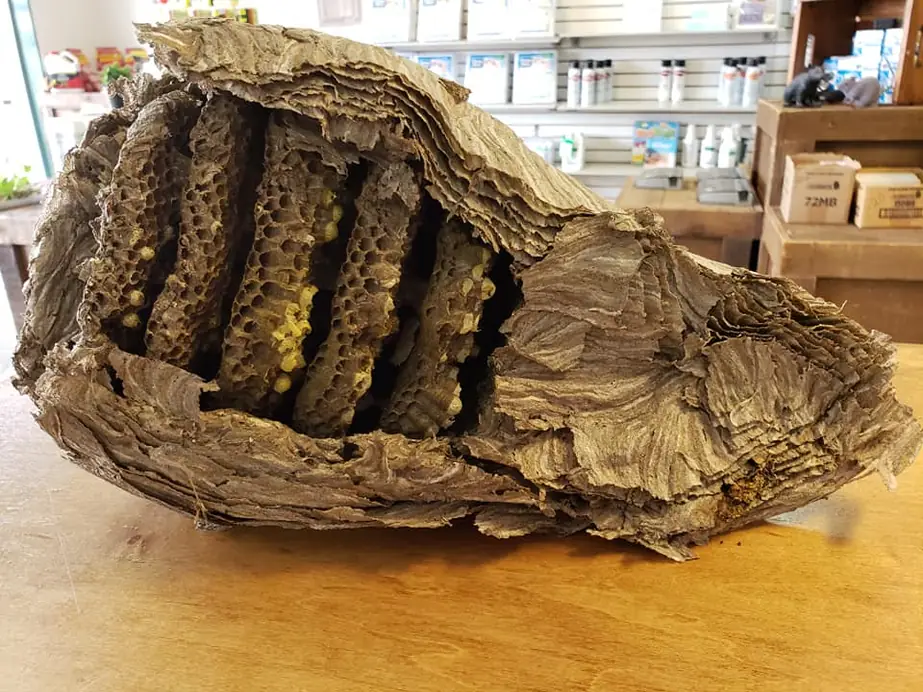
The sign out front at 4294 Richfield Road says it plainly: full service pest control and do-it-yourself supplies. Inside there are shelves of products for the problems you can reasonably take on yourself. That's a real service, and it's worth using well. This is a guide to what's there and, just as important, when it's the wrong tool.
What's on the shelves
All-N-One's product page describes it as any kind of pest control product you need. In practice the categories look like this:
- Bed bug removal supplies
- Wasp nest removal supplies and bee removal supplies
- Flea chemical, including birth inhibitors
- Roach chemical, including birth inhibitors
- Ant and carpenter ant bait and granules
- Rat and mouse traps, with bait and glue boards
The brand names you'll see on the list include Bedlam, Cimexa, Cirkil, Clean Rest, Gentrol, Maxforce, Precor and T-Rex. If you've bought pest products before, some of those will be familiar and some won't.
What a birth inhibitor is for
Birth inhibitors are the category people most often misunderstand, so it's worth a minute. When you see fleas or roaches, the adults you're looking at are only part of the population. The rest are eggs and young insects, hidden in carpet, cracks, cabinets and appliance corners. A product that kills adults will leave the others behind, and in a couple of weeks the next batch grows up and you're back where you started.
A birth inhibitor goes after that cycle. It interferes with the young as they develop so they never reach the stage where they can reproduce. That's why it works on a longer clock than a spray that kills what it touches. It asks for patience, and for using it along with an adult treatment rather than instead of one. Whatever product you pick, the label is the one authority on how to apply it, how much, and where. Read it before you buy and again before you use it, and follow it as written.
Jobs that suit a do-it-yourself approach
A line of ants trailing across the kitchen counter is a classic DIY job, and bait or granules are what that shelf is for. One or two mice in the garage or the basement is another, where traps and glue boards are a sensible first move. A small, open wasp nest where you can see exactly what you're dealing with is a third. So is a flea problem that started the week the dog came back from the groomer. In each case the problem is small, you can see all of it, and the product is made for exactly that.
The shop is open Monday through Friday from 9 to 5 and Saturday from 10 to 3, and it's closed on Sunday. If you aren't sure which product fits, bring the problem in with you, whether that's a photo on your phone or the insect in a jar, and say what you're seeing and where.
When to put the product down and call
- Anything in a wall, a ceiling or the ground. A yellow jacket nest you can't see is the clearest example. A product aimed at the entrance can send the colony into the house.
- Bed bugs that have been going for more than a few days. They spread through frames, baseboards and furniture, and a bottle of spray on the mattress doesn't reach where they live.
- Sawdust piles and curved larvae in wood. One customer described exactly that: "The bugs were leaving piles of sawdust & C shaped larvae, they were identified as Powderpost Beetles." It took a technician to name the problem and treat it.
- Carpenter ants when you can't find the source. The trail you see is not the nest, and a bait that gets one colony won't help if the real nest is behind the wall.
- Anything that comes back. If you've treated twice and the problem returns, you're missing the cause, and more product won't find it.
A call that ends with you keeping your money
Calling a company doesn't always mean signing up for something. A Google reviewer wrote about carpenter ants coming from a rotting tree stump in his yard. He explained what he was already doing about it, and the technician's answer, as he put it: "Instead of trying to sell me on service he said what I was doing seemed to be working and to just keep that up instead." He said he'd use the company again if he needed to.
That's what a good second opinion looks like. A pro who's honest will tell you when the shelf is the right answer, and a shop that also does the full service has no reason to talk you into the bigger job when the smaller one will do.
Pick the lane first
A simple rule: if you can see the whole problem and reach all of it, start with the shelf. If part of it is hidden, or it's getting bigger, or it's your sleeping space, or it's stinging people, call. The shop at 4294 Richfield Road in Flint is open for both, and you can reach the office at 810-736-9513 if you'd like to talk it through first.
All-N-One Pest Control, 810-736-9513
Call 810-736-9513More articles
Yellow jackets in the wall or the ground: what to do and what to leave alone
A nest you can't see is more dangerous to poke at than one hanging from the eaves, and most of the common fixes make it worse.
Bed bugs after a hotel stay or a dorm move: how they hitch a ride
Bed bugs don't care how clean your place is; they care about getting carried in, and the fix starts with knowing how that happens.