Mice in the garage in October: find the gaps before they find the heat
Mice don't break in; they walk through whatever you've left open, and a one-hour walk around the outside of your garage will show you most of it.
October 14, 2026 · 4 min read
October is when the garage starts to smell like a different house. The nights are cold, the leaves are down, the field behind the subdivision has been cut, and the mice that spent the summer outdoors are looking for something dry, warm and quiet. A garage is all three, and it's usually full of cardboard boxes, birdseed, pet food and old blankets. To a mouse it looks like a hotel.
How you know they're already in
Droppings are the obvious sign, small dark grains along the wall, behind storage totes and on top of the water heater. Others are less obvious: shredded paper or insulation tucked into a corner, a bag of grass seed with a chewed hole, greasy rub marks along the baseboard, tracks in a dusty shelf, a sharp musky smell when you open the door after a few days away. Mice also tend to travel the same routes, so if you find one dropping you'll usually find a line of them.
Do the outside walk first
Mice get through gaps that look much too small for them. Their bodies are soft and they can flatten to follow whatever their whiskers fit through, so the useful rule is: if you can see a gap you'd think twice about putting a pencil through, treat it as open.
Start outside in daylight and work your way around the whole foundation, then do the garage interior. Here is where to look:
- The bottom edge of the garage door, where the rubber seal has dried out, torn or flattened. Pay special attention to the corners.
- Where utility lines, pipes, gas lines and cables pass through the wall. The hole is nearly always bigger than the line.
- Dryer vents and exhaust vents, especially if the louvers don't close all the way or the screen has gone missing.
- Cracks in the foundation and the seam where the siding meets the concrete slab.
- The joint where the garage wall meets the house, and the sill area along the bottom of the framing.
- Soffits, roof returns and attic vents, where damaged screening gives mice a way in from above.
- The door between the garage and the house, which often has a worn sweep and a gap you can feel air coming through.
A good trick for the inside is to close the garage door, shut off the lights on a bright day, and look for daylight around the edges of the door and any other openings. If you can see light, a mouse can get in.
Seal with something they can't chew
This is where a lot of well-meant repairs fail. Mice chew through expanding foam, rubber, plastic and soft caulk like they were crackers. The material has to be something they won't gnaw through: coarse steel wool or copper mesh packed into the gap and then covered with sealant to hold it in, hardware cloth over vents and larger openings, and a patching compound or mortar on foundation cracks. For the garage door, replacing the bottom seal is one of the simplest fixes, and the new one should seat firmly against the floor all the way across.
Order matters. If mice are already inside, trap them first and seal afterwards. Seal the building with the mice still in it and you've trapped them in with your stored boxes, which is the opposite of what you wanted.
Make the garage less interesting
Sealing keeps them out, and cleanup keeps them from wanting to come back. Move birdseed, pet food and grass seed into sealed hard plastic or metal bins, because mice go through paper bags and thin plastic without any trouble. Swap the cardboard boxes for plastic totes where you can. Keep stored items a few inches away from the walls so you can see along the edge. And stack firewood and lumber away from the building, since a woodpile against the wall is a ready-made route to the gap you just sealed.
What an inspection and bait program adds
All-N-One Pest Control's rodent service covers mice and rats, and it starts with an inspection both inside and outside the building. The technician gives you a list of the possible entry points the rodents used, which turns what is usually a guessing game into a repair list. You can fix the entries yourself or have somebody do it, but you'll know where to look.
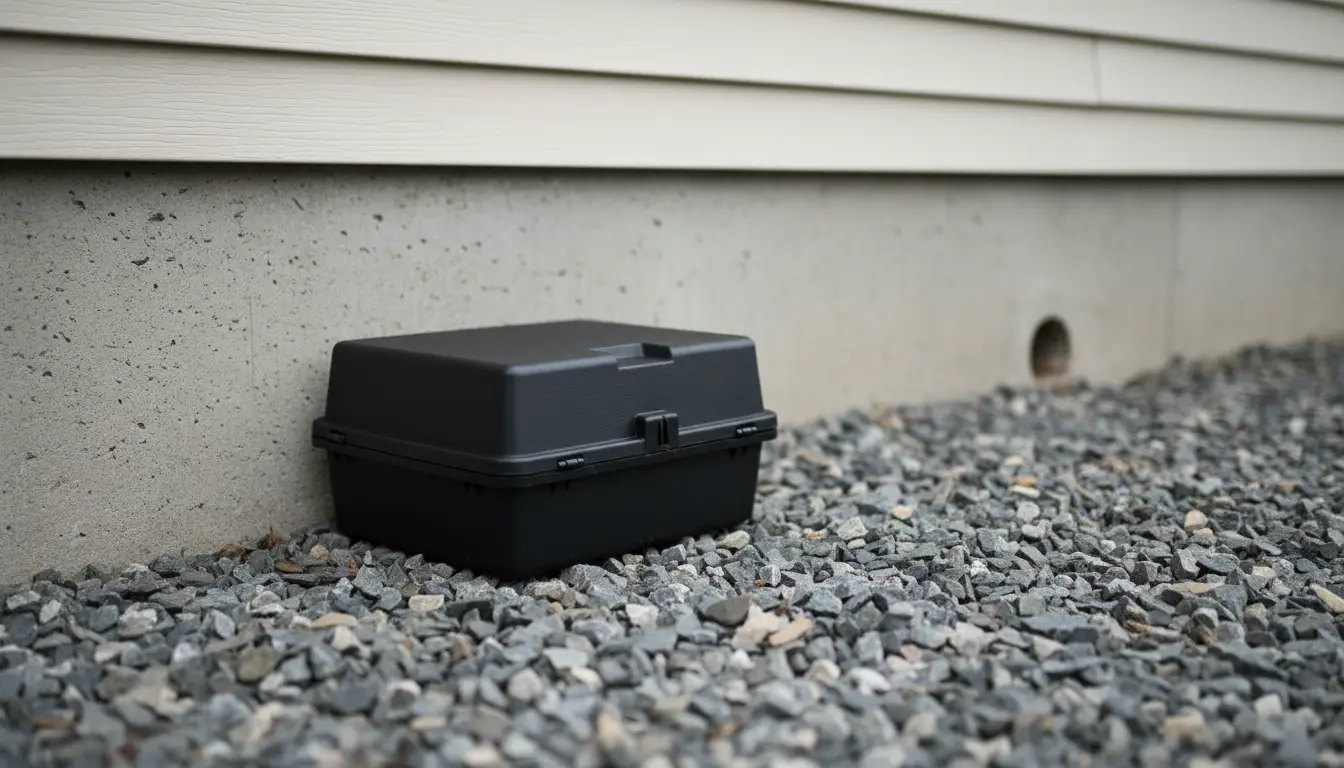
Outside, the service uses tamper-resistant bait boxes along the structure. That means the bait sits inside a box built to keep it contained, and not out in the open on the ground. For many homes the combination of sealed entry points and boxes along the foundation does more than traps alone, since traps catch the mice that are already in and the boxes deal with the ones still coming.
If you'd rather handle the first round yourself, the shop at 4294 Richfield Road in Flint carries rat and mouse traps with bait and glue boards. Mice that keep coming back after you've trapped a handful are telling you the entry points are still open, which is the point where an inspection earns its keep.
To talk it through or schedule an inspection, call 810-736-9513. October is a good time to do this, because the mice that have already moved in are about to get a lot more comfortable.
All-N-One Pest Control, 810-736-9513
Call 810-736-9513More articles
Yellow jackets in the wall or the ground: what to do and what to leave alone
A nest you can't see is more dangerous to poke at than one hanging from the eaves, and most of the common fixes make it worse.
Bed bugs after a hotel stay or a dorm move: how they hitch a ride
Bed bugs don't care how clean your place is; they care about getting carried in, and the fix starts with knowing how that happens.